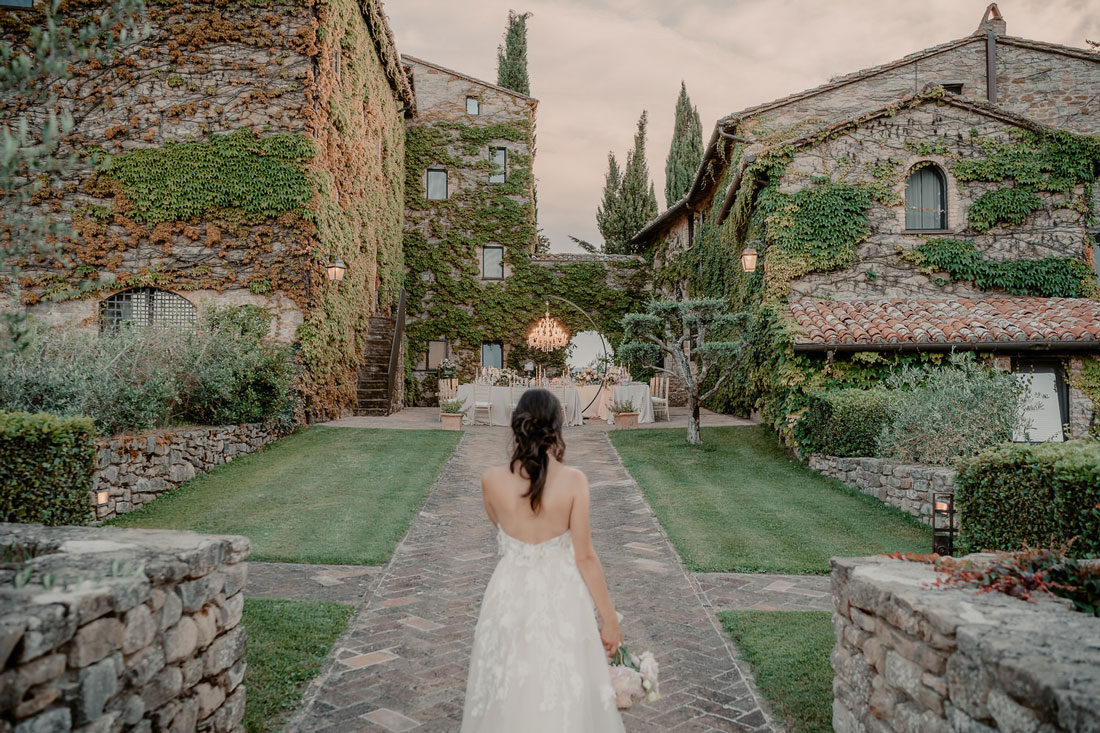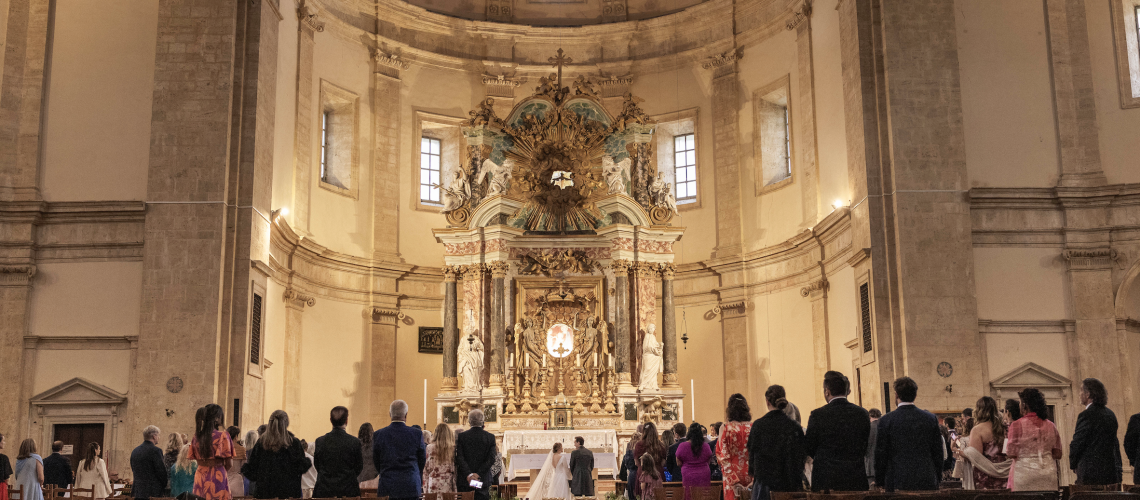

Planning a high-end destination wedding in Umbria requires managing official paperwork, understanding regional logistics, and allocating your budget effectively. For international couples, primarily from the UK, the US, and Northern Europe, getting legally married in Italy involves specific steps such as obtaining a Nulla Osta or Atto Notorio, alongside rigorous timeline management.
This guide outlines the essential legal procedures, provides a transparent overview of investments, and covers venue logistics to help you curate a flawless celebration in the heart of Umbria.
What are the legal requirements for getting married in Umbria?
To host a legally binding wedding in Umbria as non-residents, foreign couples must satisfy both Italian legal frameworks and the requirements of their home country.
Civil ceremonies vs. symbolic ceremonies vs. Catholic weddings
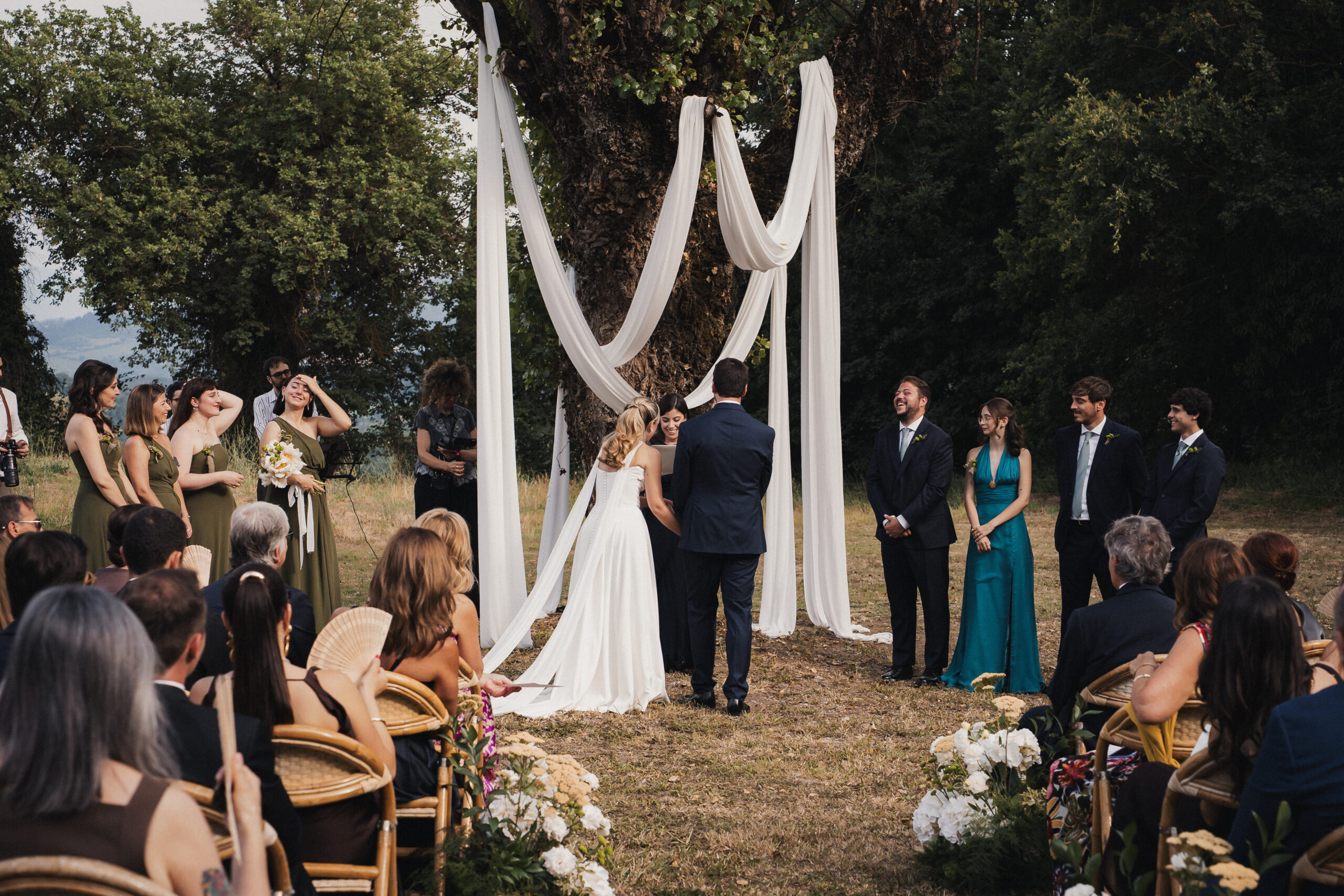
Civil ceremonies: Legally recognized weddings must take place in designated municipal spaces (Casa Comunale), which often include historic palaces, medieval castles, and selected private estates across Umbria.
Symbolic ceremonies: Carrying no legal weight, symbolic blessings offer complete freedom regarding location, personalized vows, and ceremony structure.
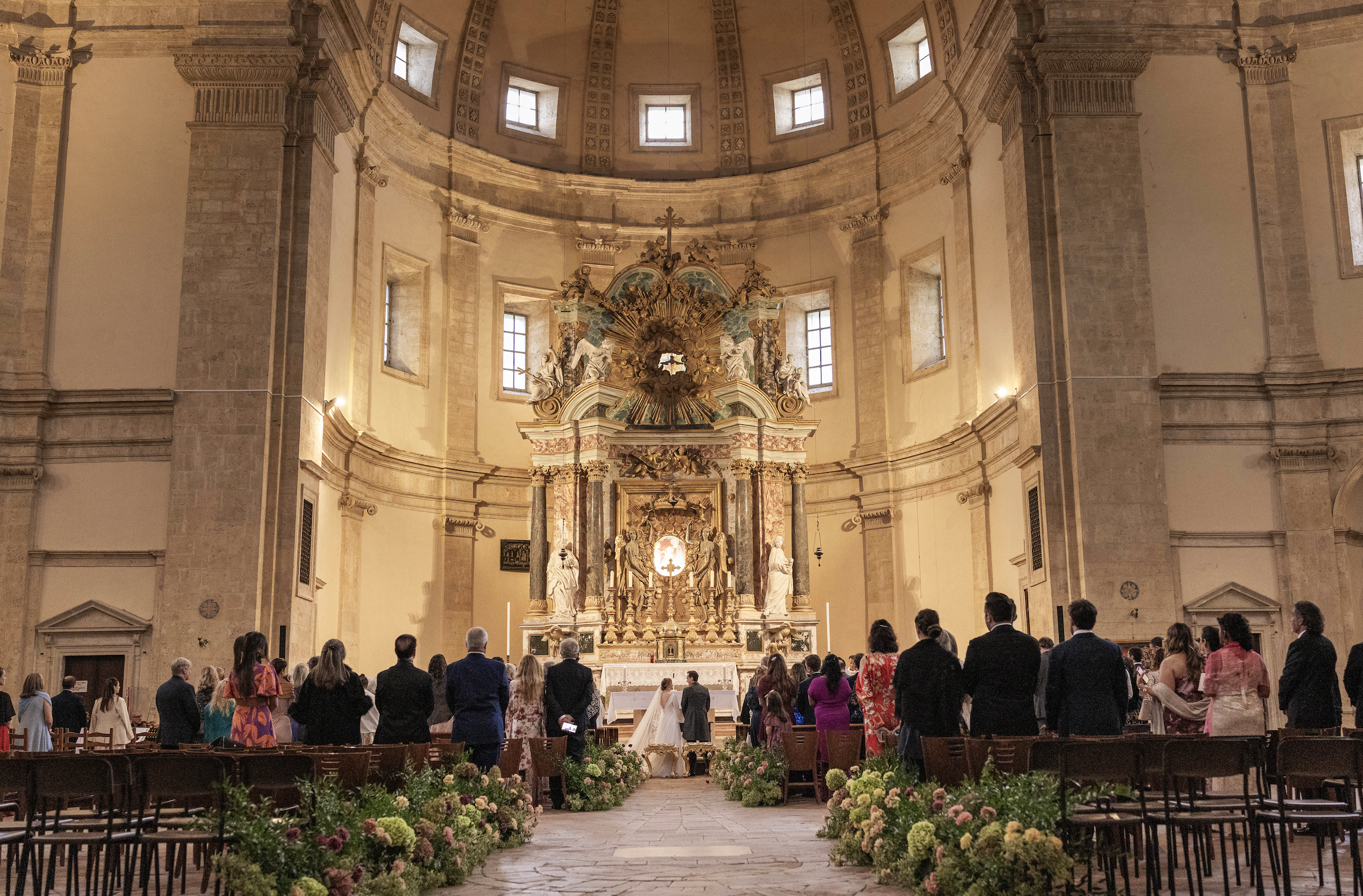
Catholic ceremonies: Require both civil documentation and approval from local diocesan authorities, and must take place inside a consecrated church or chapel.
Primary documentation required by country of origin
| Country of origin | Primary document required | Additional steps / authorities involved |
|---|---|---|
| United Kingdom | CNI (Certificate of No Impediment) & Statutory Declaration | Legalization via Apostille (FCDO); official sworn translation into Italian. |
| United States | Atto Notorio & Sworn Affidavit (Nulla Osta) | Issued by the US Consulate in Italy and legalized at the local Prefettura. |
| EU countries | Nulla Osta or Multilingual Certificate | Varies by country; generally exempt from legalization under EU regulations. |
Planning note: We advise starting the legal documentation process at least 6 to 9 months prior to your wedding date to smoothly navigate consular appointments and translation processing times.
How much does a destination wedding in Umbria cost?
The investment for a destination wedding in Umbria varies based on the venue type, guest headcount, and level of event customization. For a multi-day experience (50 to 100 guests), overall budgets typically start at €50,000 – €70,000 for refined boutique setups, reaching €100,000 – €150,000+ for highly bespoke, complex productions.
Indicative budget breakdown
Venue rental (multi-day exclusive use): €10,000 – €30,000+ (depending on estate prestige and guest capacity)
Catering & wine experience: €160 – €260+ per guest (based on menu curation, wine pairings, and signature cocktails)
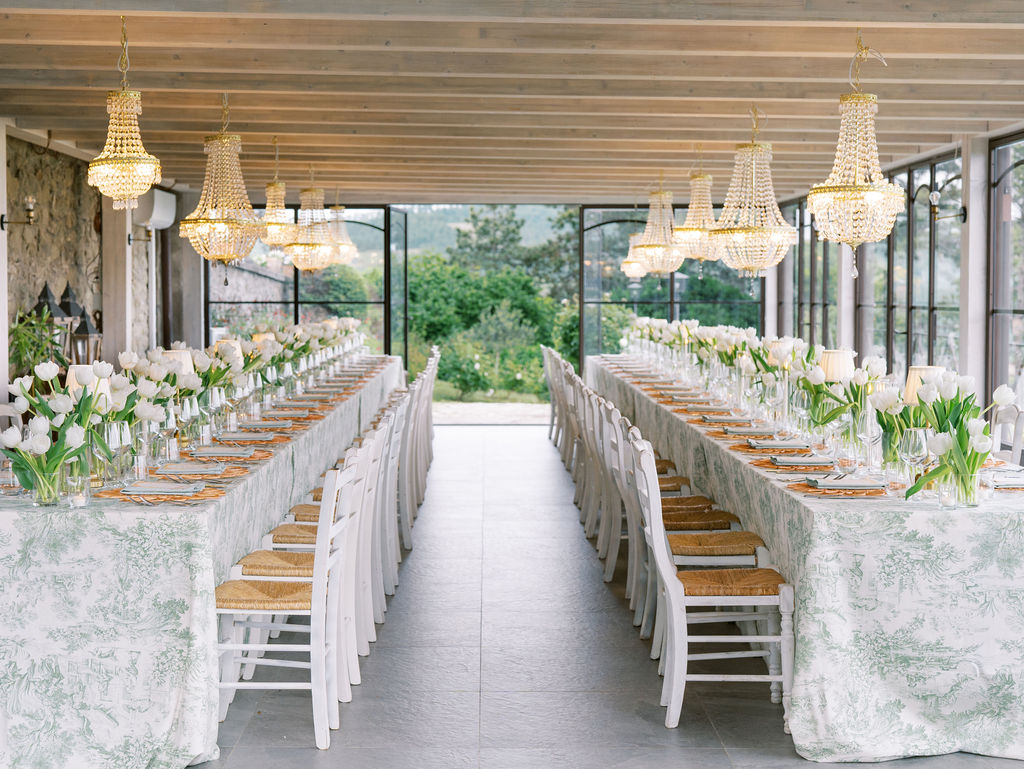
Event design, production & floral styling: €6,000 – €30,000+
Fine art photography & videography: €3,000 – €12,000
Logistics, shuttles & guest experiences: €4,000 – €10,000+
How do guests travel to venues in Umbria? (Logistics & airports)
Efficient transportation management is essential for an inland region rich in historic hilltop towns. Umbria is well-connected through three main airport hubs and high-speed rail lines.
Primary airport access points
Perugia International Airport (PEG): Ideal for regional flights and direct UK/European connections. Located 15 to 40 minutes from central venues.
Rome Fiumicino (FCO) / Ciampino (CIA): The primary international hub for US and global guests. Located approximately 2 to 2.5 hours by car or direct train to southern Umbria (Orvieto/Todi).
Florence Airport (FLR): Convenient for events in northern Umbria (Lake Trasimeno/Gubbio), located 1.5 to 2 hours away.
Frequently asked questions
Can non-residents legally get married at a private villa in Umbria?
Yes, provided the estate has been officially designated as a Casa Comunale by the local municipality. If not, couples can complete the legal paperwork at the local town hall beforehand and host a symbolic ceremony at the villa.
How far in advance should we book an Umbrian venue?
The most sought-after historic estates, hamlets, and private villas generally require booking 8 to 12 months in advance, particularly for peak-season weekends (May through October).
Is an official interpreter required for a civil ceremony?
Yes. If neither partner speaks fluent Italian, Italian law requires an official interpreter to be present during both the preliminary declaration (Promessa di Matrimonio) and the civil ceremony itself.
How do we manage guest accommodation and transportation?
We personally oversee every detail of your guests’ journey: from selecting boutique hotels and nearby country estates for their stay, to coordinating private dedicated shuttles for the wedding day and surrounding events. You and your guests only need to immerse yourselves in the experience.
Explore our Real Weddings on Instagram to discover how we bring bespoke visions to life: https://www.instagram.com/dreamon_wedding/